We use cookies to enhance your experience and provide essential functionality. We do not track users for advertising purposes. By clicking "Accept", you consent to our use of cookies.
Launch offer - Professional memberships are free for a limited time!
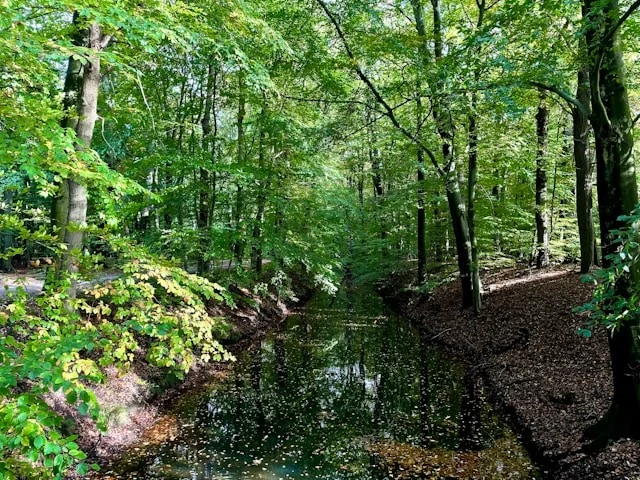
When to Build Swales and When Not To: Understanding Water Flow in Wet Climates

Article Author
Swales are one of permaculture’s most talked-about tools and also one of the most misunderstood. They are often presented as a universal fix for water management, yet in regions with heavy rainfall or poor drainage, they can sometimes do more harm than good.
Before you pick up a shovel, it helps to understand what swales actually do, when they work beautifully, and when it is better to let water move naturally through the landscape.
What a Swale Really Is
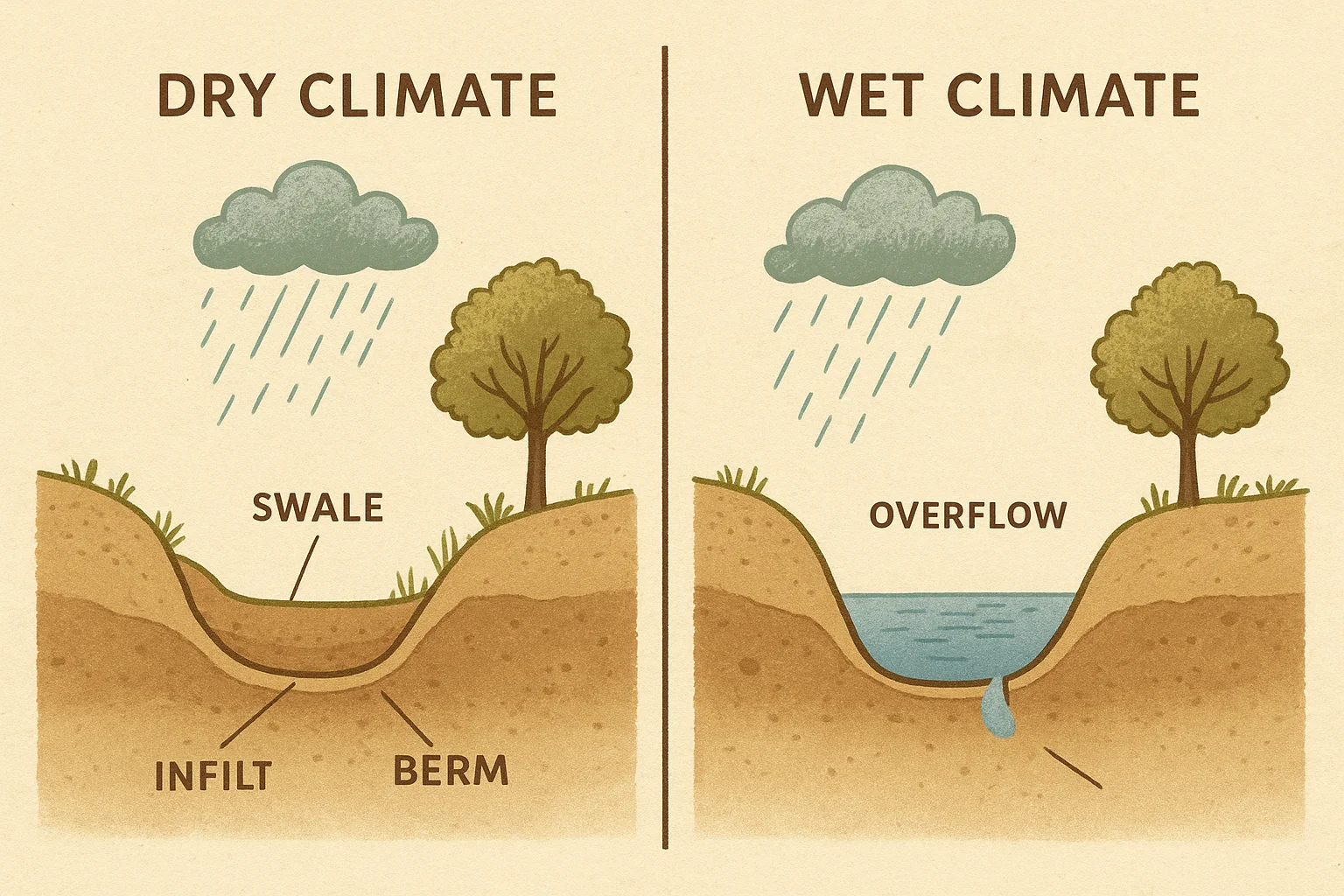
A swale is a shallow, level ditch dug along the contour of the land, with a mound (or berm) on the downhill side.
Its purpose is to slow down and spread rainwater across the slope so that it can soak into the soil instead of rushing away as runoff.
This makes swales incredibly effective in dry or seasonal climates where the main challenge is keeping water in the ground long enough for plants to use it.
However, in areas that already experience regular rainfall and high soil saturation, such as much of the UK, the Pacific Northwest, or New York State, a swale can quickly turn into a boggy mess instead of a water-harvesting success.
The Problem with Swales in Wet Climates
When the ground is already wet, adding swales can trap more water than the soil can absorb. The result can be standing pools of water, mosquito breeding areas, root rot, and in some cases erosion from overflow.
A swale slows down water, but if water is already moving slowly or has nowhere to go, it can drown your landscape instead of healing it.
This does not mean you should never use them in wet climates. It means they must be carefully adapted to local conditions.
Signs You Might Not Need a Swale
- Your soil stays saturated for long periods after rain.
- The area already has poor drainage or a high water table.
- You notice standing water on your land after storms.
- You live in a region with more than 1,000 mm of rain per year.
In such cases, holding even more water in the landscape is not regenerative. It can be counterproductive.
Image
What to Do Instead
If you live in a wet or temperate climate, consider water management methods that encourage drainage and natural flow.
1. Keyline Design
Instead of holding water, keyline systems guide it gently across slopes. This rehydrates dry ridges and spreads moisture more evenly without creating waterlogged zones.
2. Raised Beds and Mounded Planting Zones
Lifting plant roots above the waterline helps prevent rot and gives excess water a place to drain.
3. Mulching and Groundcover
A thick layer of organic mulch slows evaporation while allowing infiltration to continue without creating soggy soil.
4. Tree-Based Water Regulation
Deep-rooted trees act as natural pumps. They draw water down and release it gradually through transpiration.
When Swales Can Still Work in Wet Regions
There are situations where a swale can still be useful if it is small and well-placed.
For example:
- On upper slopes to slow stormwater before it floods lower areas.
- Along paths or garden edges where erosion is a problem.
- In combination with overflow outlets or spillways that release excess water safely.
In these cases, think of swales as temporary speed bumps for water. They guide and slow it rather than store it indefinitely.
Understanding Water Flow Is the Real Goal
Every landscape is unique. A swale is not a universal solution but a response to a specific water pattern.
Before digging, spend time observing your site. Watch where puddles form, where water flows after rain, and where the soil dries first. Often you will discover that the land already knows how to handle water. Your job is to work with that pattern, not against it.
Conclusion
Swales can be a powerful tool for regeneration, but only when used in the right context. In drylands, they help bring life back to the soil. In wet climates, they can cause more problems than they solve unless they are carefully designed with overflow systems or replaced with better-suited approaches.
True permaculture design begins with observation and adaptation. Once you understand how water wants to move through your land, the right technique becomes obvious.