We use cookies to enhance your browsing experience, serve personalized content, and analyze our traffic. By clicking "Accept", you consent to our use of cookies.
Launch offer - Professional memberships are free for a limited time!
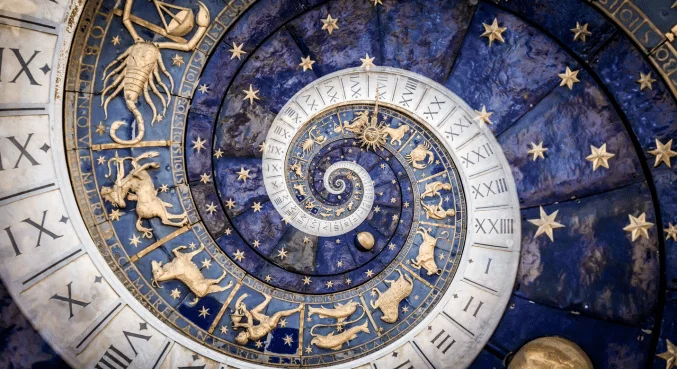
Why Moving the Earth from the Center Changed Everything
There is a familiar story taught in schools and repeated endlessly. For centuries, the Church insisted that the Earth was the center of the universe. Then, enlightened scientists arrived and revealed the truth, the Earth revolves around the Sun. The Church resisted out of fear and a desire for power, and science eventually liberated humanity from ignorance.
It is a compelling narrative. It is also deeply misleading.
What is rarely mentioned is that heliocentrism was not a radical new discovery in the sixteenth century. The idea that the Earth moves around the Sun was already known in antiquity. Aristarchus of Samos, a Greek astronomer in the third century BCE, explicitly proposed a heliocentric model. In ancient India, astronomical texts such as the Surya Siddhanta also contained sophisticated planetary calculations that did not strictly depend on a naive Earth centered literalism. Even within the Islamic Golden Age, scholars like Al Biruni discussed the possibility of Earth’s motion without theological panic.
The knowledge existed. The question was never simply whether the Earth moves, but which worldview should structure human understanding of reality.
Worldviews Are Not Neutral
A worldview is not a technical diagram of the cosmos. It is a framework that shapes how people understand meaning, purpose, and their place in existence.
In the classical geocentric worldview, associated with Aristotle and later refined by Ptolemy in the Almagest, Earth functioned as the observational and symbolic center. This did not necessarily mean that humans believed themselves physically superior, but that reality was structured around human experience. The heavens moved in relation to us. Time, cycles, seasons, and meaning unfolded from the human position within the cosmos.
This worldview supported theology, metaphysics, and symbolic systems that treated the universe as intelligible and meaningful to human life.
The heliocentric model, popularized by Nicolaus Copernicus in the sixteenth century and later defended by Galileo Galilei, shifted this center away from human perception. Humanity became one object among many, living on a moving sphere, orbiting a star, itself one among countless others. The model was mathematically elegant, but existentially transformative.
The Church understood that this shift was not merely scientific. It was psychological, spiritual, and civilizational.
Astrology and the Question of Perspective
Astrology exposes this distinction with particular clarity.
Traditional Western astrology, including horary astrology, is built entirely on a geocentric framework. This is not because astrologers were ignorant of mathematics, but because astrology is phenomenological. It is based on how celestial bodies appear to move relative to the Earth and the observer.
Ptolemy himself, often cited as a defender of geocentrism, was also the author of the Tetrabiblos, one of the foundational texts of astrology. His astronomical and astrological systems were internally consistent precisely because they shared the same Earth centered perspective.
When Earth is treated as a secondary, moving object rather than the experiential center, astrology loses coherence. Horary astrology in particular depends on the moment as observed from Earth. Its symbolic logic does not survive a purely heliocentric abstraction.
This reveals something crucial. Some systems of knowledge are not designed to describe the universe as an external object, but to articulate meaning as it is lived and experienced.
Why the Church Resisted
The Church’s resistance to heliocentrism was not simply an attempt to suppress truth or maintain authority. It was, at least in part, an attempt to preserve a worldview in which humanity remained central to meaning.
Christian theology is built on the idea that creation is oriented toward human spiritual development. Remove humanity from the center, even symbolically, and spirituality becomes secondary. Matter becomes primary. Mechanism replaces meaning.
Figures within the Church were not unaware of the astronomical arguments. They were concerned with the consequences. Once the cosmos is reframed as indifferent and mechanical, spiritual intelligence weakens. Inner development loses priority. Salvation is replaced by progress. Wisdom is replaced by measurement.
These were not irrational fears. They were warnings.
The World We Now Live In
The modern world reflects the outcome of that shift.
We live in a society that is technologically advanced, materially obsessed, and spiritually fragmented. Value is measured in productivity, efficiency, and economic output. Inner life is privatized, marginalized, or dismissed entirely. Meaning is treated as subjective, while material explanations are treated as absolute.
This did not happen by accident.
When the center moved from Earth to the Sun, it also moved from spirit to matter. From lived meaning to abstract models. From participation in a meaningful cosmos to observation of a mechanical one.
What Actually Matters
The question is not whether the Earth physically revolves around the Sun. Science is free to model physical processes as it sees fit.
The real question is which perspective serves human consciousness.
We live on Earth. We perceive from Earth. Meaning arises from our position, not from an imagined viewpoint outside the universe. A worldview that ignores this may be technically impressive, yet spiritually empty.
Truth is not only about external accuracy. It is also about internal coherence and the kind of human being a worldview produces.
The Church understood that distinction. We are now living in a civilization that largely forgot it.